Regional grounding
Research reflects the region’s histories, institutions, political economies, security systems, and relationships with external actors.
 Horn of Africa Institute
About HAI
The Horn of Africa Institute is an independent research and policy organization based in Washington, DC, focused on the Horn of Africa, Red Sea, and Arabian Peninsula.
Mission
HAI produces rigorous analysis, develops policy options, and examines the institutions, political relationships, economic systems, security arrangements, environmental pressures, and technologies shaping the region.
The Institute’s purpose is to improve the quality of public reasoning and institutional decision-making by identifying assumptions, assessing evidence, comparing alternatives, and communicating uncertainty clearly.
Regional scope
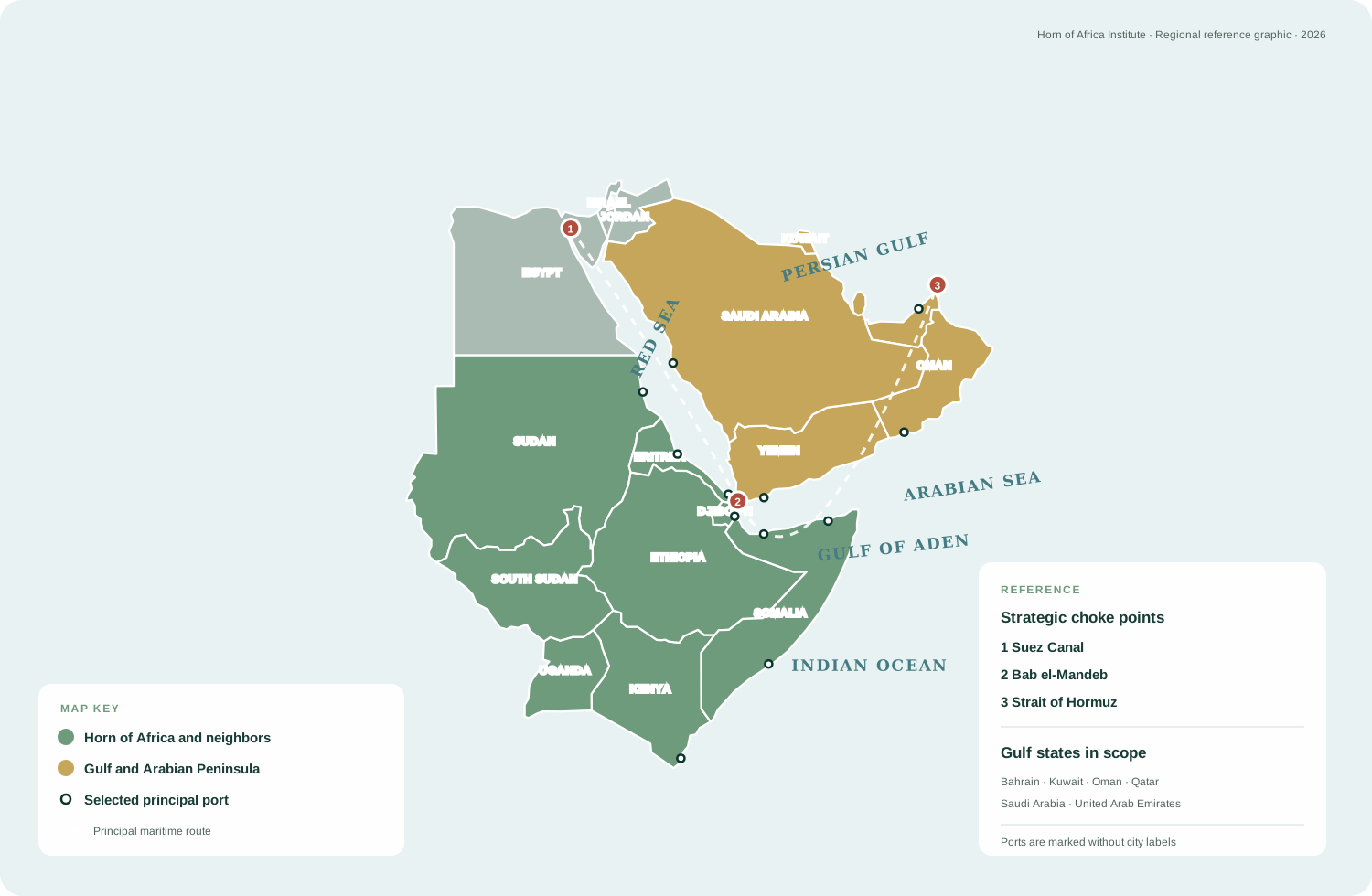
HAI’s principal area of study includes Djibouti, Eritrea, Ethiopia, Kenya, Somalia, South Sudan, Sudan, and Uganda.
Research also examines the regional systems connecting these countries with the Red Sea, Gulf of Aden, Nile Basin, Indian Ocean, East African interior, and Arabian Peninsula.
Approach
Research reflects the region’s histories, institutions, political economies, security systems, and relationships with external actors.
Methods must fit the question, expose assumptions, distinguish evidence from inference, and withstand informed scrutiny.
Research clarifies choices, trade-offs, implementation requirements, institutional constraints, and foreseeable consequences.
HAI evaluates competing explanations and policy alternatives through evidence and reasoned analysis.
Independence and Standards
Research questions, findings, and recommendations follow evidence and analytical judgment. HAI retains responsibility for its research methods, findings, interpretations, and conclusions.
The Institute uses source verification, transparent attribution, appropriate review, conflict-of-interest disclosure, confidentiality and data-protection practices where required, and correction of substantive errors.